$9 million to restore the Lost Cause at Arlington
$9 million to restore the Lost Cause at Arlington. Hegseth calls the Confederate memorial the “Reconciliation Monument.” In 1988, my college threw a “Reconciliation Ball 1865.” Same word, same job.

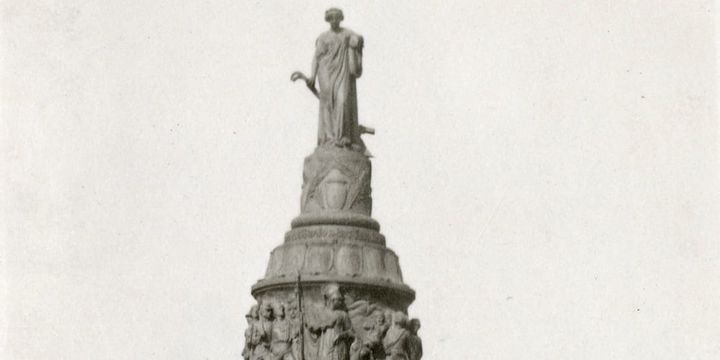
Arlington’s Confederate memorial is returning to the cemetery, and the restoration will cost $9 million. Defense Secretary Pete Hegseth calls it the “Reconciliation Monument.” He didn’t come up with the name. In 2023, as the Army prepared to remove the statue, more than 40 House Republicans wrote to then-Defense Secretary Lloyd Austin insisting the memorial commemorates “reconciliation and national unity,” not the Confederacy. That vocabulary is free, because it’s inherited.
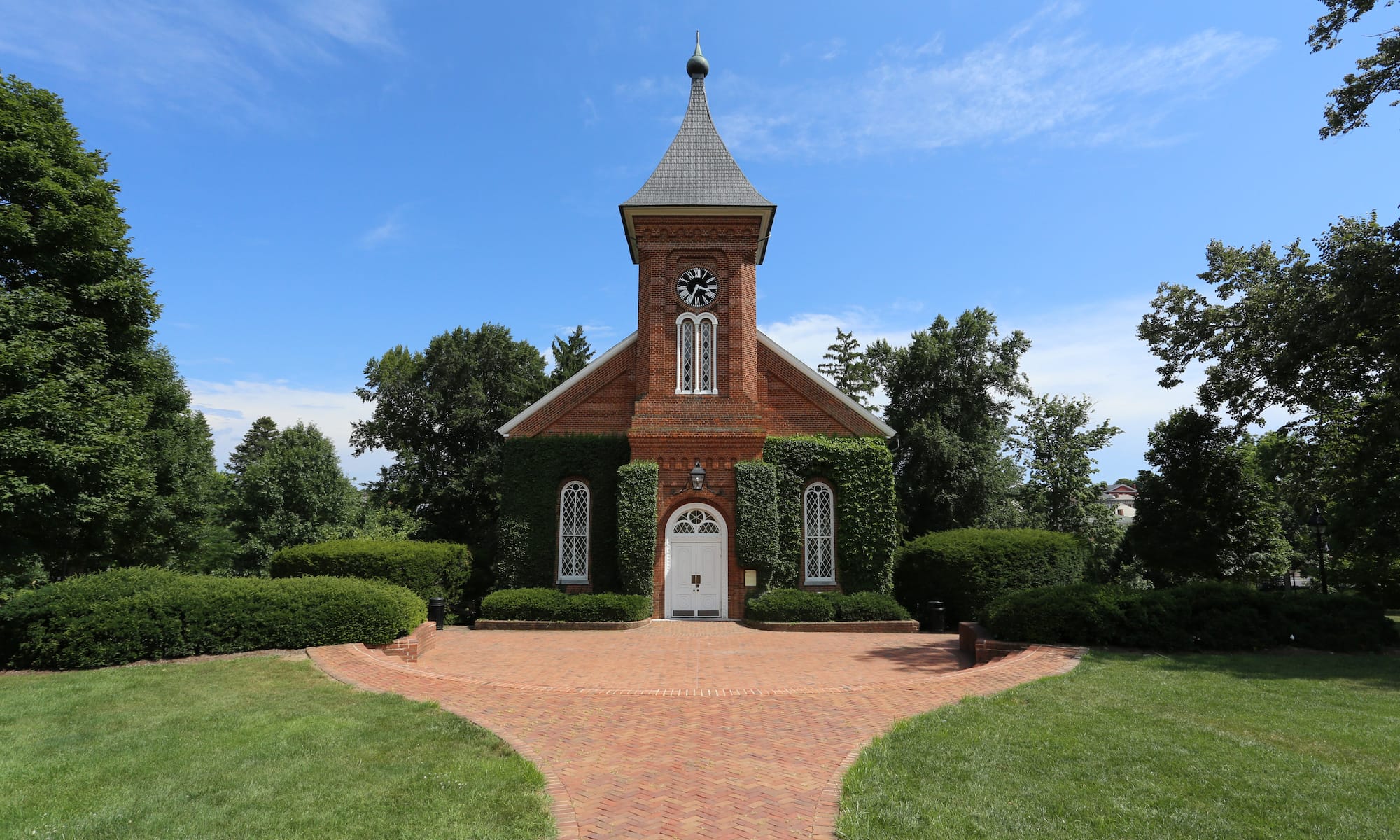
In March 1988, I was a freshman at Washington and Lee, and that year’s Fancy Dress was the Reconciliation Ball 1865. The poster showed two couples in front of a 35-star flag—a man in Confederate gray, a man in Union blue tipping his hat, and two women in ball gowns. Fancy Dress was one of the biggest weekends of every year, and I bought the poster and t-shirt. (And had a great time to be fair.)
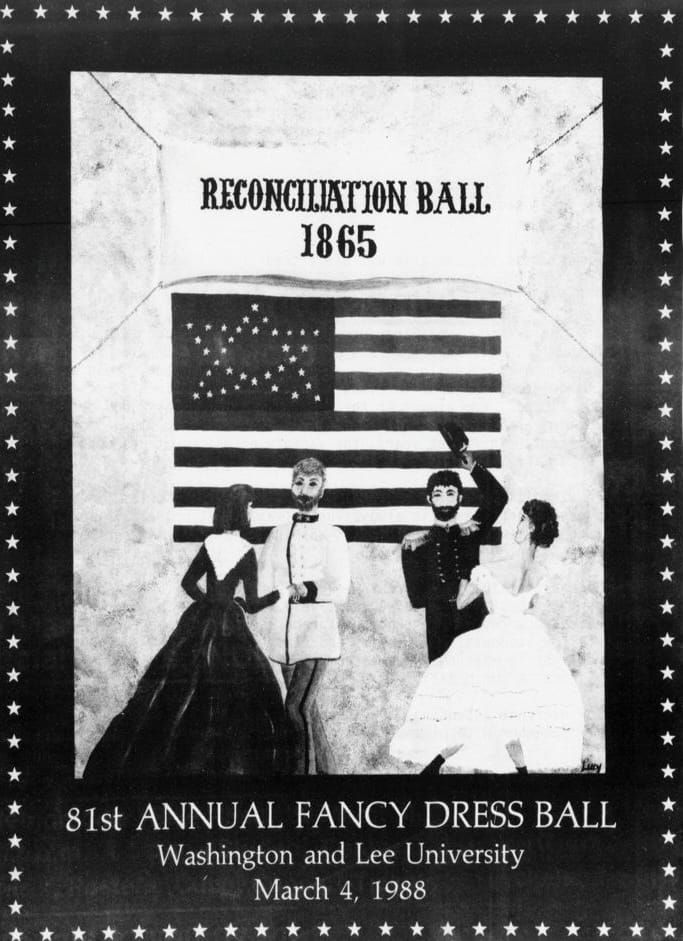
It took me almost 30 years to understand what wasn’t in it. t was Charlottesville that did it, in August 2017: men carrying torches across the UVA grounds, a rally organized around a statue of Robert E. Lee, a young woman killed on a downtown street that now carries her name.
1865 is the year slavery ended. Millions of people were freed from bondage. The poster turned that year into a dance between North and South. Not one of those millions appears anywhere in the frame. There weren’t many Black students in the room that night in 1988 either.
This week the word came back, and now it has a price.
On Wednesday, Task & Purpose reported that Arlington National Cemetery officials expect Pete Hegseth’s restoration of the Confederate memorial to cost taxpayers about $9 million. The Army confirmed that Hegseth ordered it. His office would not answer questions about how it might affect morale or unit cohesion. The Army confirmed that it never asked service members. Last week the Commission of Fine Arts approved the final design. The bronze goes back on its granite base in Section 16 in 2027.
The “Reconciliation Monument” isn’t its name. Moses Ezekiel’s 1914 sculpture is the Arlington Confederate Memorial. It includes enslaved people, among them a “mammy” figure holding a white officer’s child.
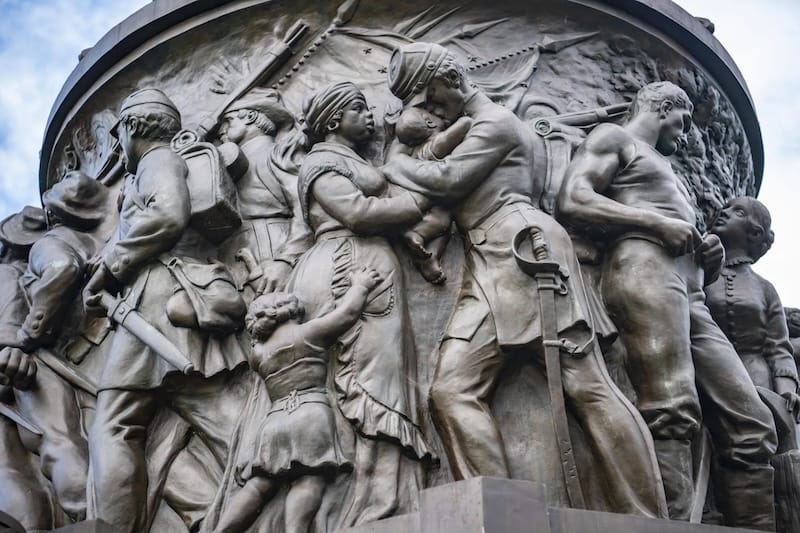
Congress created the Naming Commission and ordered Confederate memorials off military property. The statue came down in December 2023. Hegseth said it never should have been removed, and he blamed “woke lemmings.”
So, reconciliation between whom?
David Blight answered that question twenty-five years ago in Race and Reunion: The Civil War in American Memory. Eric Foner’s New York Times review quotes Blight: “A segregated society demanded a segregated historical memory.” (p. 361) . White Northerners and white Southerners made peace by agreeing to forget what the war had been about. Emancipation was the price of reunion. Black Americans were the ones who paid it.
The word has done the same job each time it’s appeared. In 1914, the monument told the reunion story with Black people present as loyal props. In 1988, the poster told it with Black people gone. In 2026, the cemetery has a new plaque that calls the project “comprehensive conservation and refurbishment,” and a Defense Secretary calls the removal an act of lemmings. Each version leaves out more of what happened.
Watch what else leaves the frame. In 2025, the same cemetery took down its public lists of notable graves of Black, Hispanic, and women service members. Those people are buried there. Now the restored memorial is getting $9 million, and the people in those graves are getting less space in the cemetery’s own account of itself.
Plenty of people never needed that long to see all this, even if it took me years. They knew in 1914, in 1988, and they know now.
Reconciliation that leaves people out of the picture isn’t reconciliation. It’s a ball with a white guest list.
Addendum: Sculptor Moses Ezekiel, VMI '66 (that's 1866) fought at New Market with his fellow VMI cadets. He also had the distinction of being VMI's first Jewish cadet. (Pointed out to me by a friend of Not Unmindful)