The lost cause comes back again, and loses, again


"The past is never dead. It's not even past."
— William Faulkner, Requiem for a Nun
"This whole land, the whole South, is cursed, and all of us who derive from it, whom it ever suckled, white and black both, lie under the curse."
— William Faulkner, Go Down, Moses
On August 6, a federal judge in Harrisonburg, Virginia, issued a 141-page ruling that reads, in places, like an argument with itself about whether it's allowed to say the obvious thing out loud. Senior U.S. District Judge Michael F. Urbanski found that the Shenandoah County School Board violated the Fourteenth Amendment, Title VI of the Civil Rights Act, and the Equal Educational Opportunities Act when it voted, in 2024, to restore the names Stonewall Jackson High School and Ashby-Lee Elementary School—names the same board had voted to retire four years earlier, for exactly the reasons you'd expect.
Urbanski spent much of the opinion insisting the case wasn't about history.
"Nor is this case about the appropriate legacy of the three Confederate officers for whom the schools were named.... While that debate casts cultural, historical, and political shadows over this case, often evoking strong emotions, the issues to be decided here are entirely legal in nature."
He was right about the law. He was also, in the very act of drawing that line, demonstrating that the line doesn't hold. The legal question and the historical one are just two sides of the same coin.
What the School Board actually did
Strip away the "process was rushed" defense the board leaned on for four years, and the sequence is simple. In 2020, following George Floyd's murder, the board voted 6-0 for a resolution condemning racism, and then 5-1 to retire the Confederate names as one of the resolution's "next steps." A community process replaced them with Mountain View High School and Honey Run Elementary. Yes — a clean majority, voted in by the community itself.
Then the Lost Cause fought back. A group called the Coalition for Better Schools, affiliated with a local outlet called the Freedom Press, spent four years planning to bring the Confederate names back. Three School Board seats flipped in 2021, and the board's attorney was fired in 2022 for "espousing liberal positions." That year's restoration vote failed, tied 3-3. Three more seats flipped in 2023, all endorsed by the Freedom Press, and in 2024 the board finally got its restoration vote. A vote that was justified by a "survey" that was nothing more than a postcard mailer drafted and tabulated by the Coalition itself, sent to every address in the target zip codes. Not just the affected school districts, but everyone. No verification, no fixed counting rules, and a 13.6% response rate counted as "proof."
The board didn't request the survey, didn't vet it, and had never conducted anything like it for any other decision in four years. It voted to restore the names anyway.
Just plugging sod into a dam that had already broken.
Urbanski's opinion treats this as what it is. It's not confusion about process, but a machine assembled with intent and run to completion.
"The Confederate names were restored with complete awareness of their historic legacy and ongoing discriminatory impact.... the affirmative act of reinstating these vestiges of segregation is far more problematic than a passive failure to remove a long-standing name or symbol."
The second bit does a lot of work. The distinction matters, because it's the whole case in one clause.
A bit of history
Trust me on the irony here.
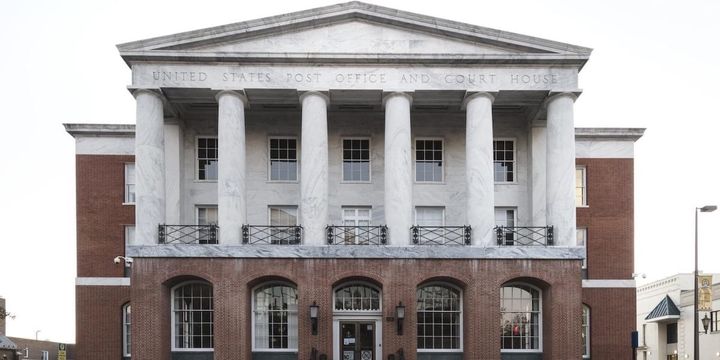
Urbanski's chambers sit in the same federal courthouse on North Main Street where, in 1956, Judge John Paul Jr. issued Virginia's first order under Brown v. Board of Education, directing a local school system to desegregate immediately. Two years later, Paul's ruling forcing Charlottesville and Warren County to admit Black students prompted the governor to shut the affected schools rather than comply—an early skirmish in the massive resistance campaign that would, a year after that, put Stonewall Jackson's name on a new high school forty miles south.
The building didn't change. The argument didn't, either. A memorial nobody ever took down is one kind of legal and moral problem. A memorial that was created once, deliberately. Then, it was formally repudiated, and then deliberately created again after a four-year campaign that resulted in firing their own lawyer. That's a different animal entirely.
The board's own record established that Stonewall Jackson High School was named in 1959 to discourage Black students from transferring in, and that Ashby-Lee Elementary was named in 1974 amid still massive resistance to Brown, "in part to reflect the county's opposition to federal mandates with regard to school integration."
Those weren't lost causes. They were tools. In 2024, the board picked the tools back up.
Two alumni, two sides, one courtroom
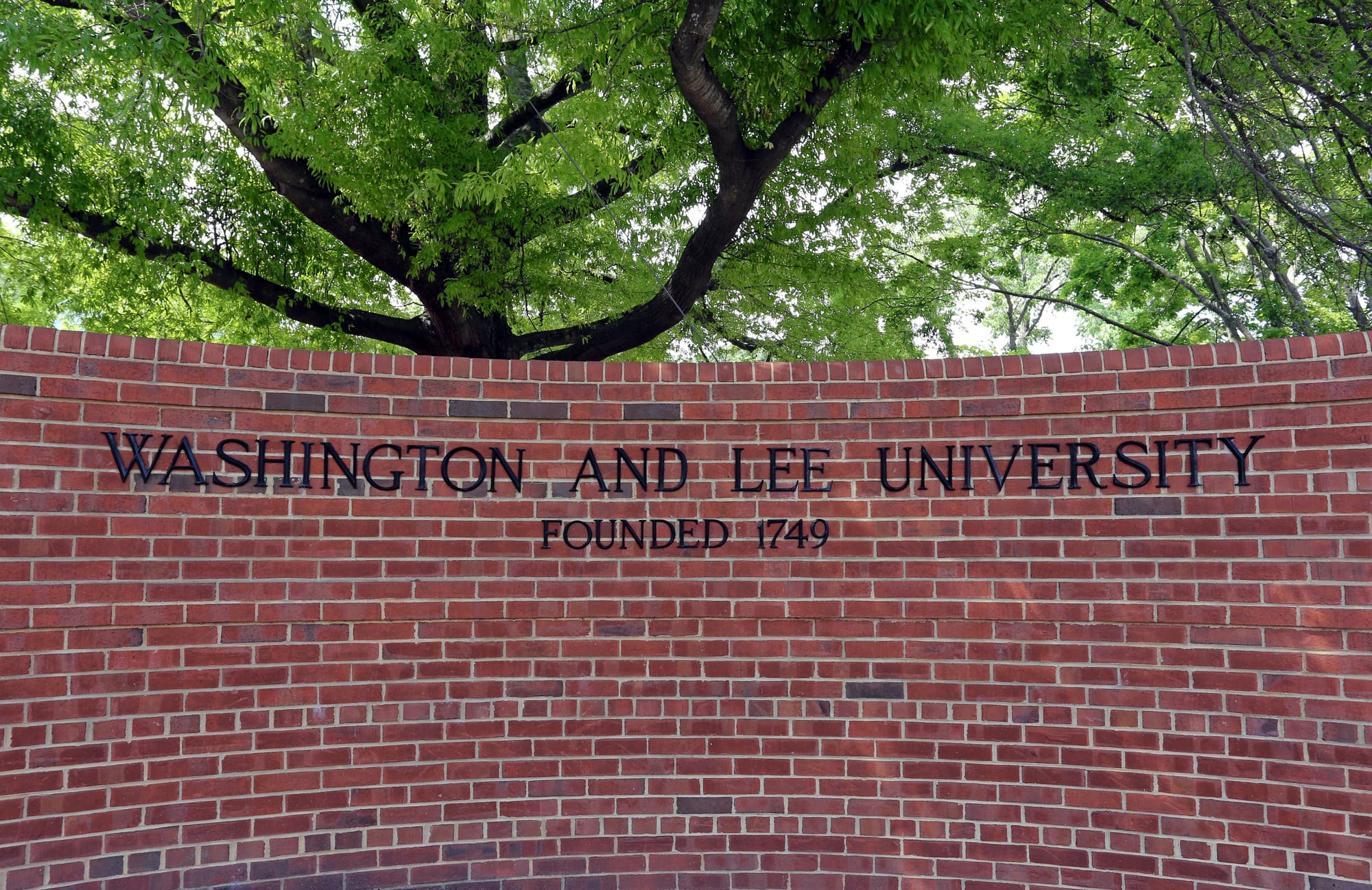
The trial record includes a detail that belongs to a different beat, but it's still relevant here. The plaintiffs' lead historian and the board's rebuttal expert both hold degrees from Washington and Lee University. You can probably guess the rest, but here it is.
Brig. Gen. Ty Seidule (U.S. Army, ret.) testified for the plaintiffs. He's a W&L history graduate who went on to chair the Pentagon's commission on renaming military bases, and his book, Robert E. Lee and Me, is a work Not Unmindful has cited approvingly many times. It's still worth saying plainly, since it's not a coincidence he's the one making this argument well. His testimony was blunt: the Confederacy's animating purpose was the preservation of slavery, and Lee himself "is worthy of study, but he is not worthy of commemoration."
Gibson Kerr testified for the board. Also a W&L graduate, he says the school gave him his "fascination with Lee as 'a revered figure.'" In 2024 he published Un-Cancel Robert E. Lee, motivated, he testified, by a sense that "history was being erased" as Lee's name came down from streets and schools across Virginia. He was called specifically to rebut Seidule on Lee's motivation for fighting.
The court didn't split the difference. Kerr's testimony was, in Urbanski's words, "neither fully credible nor persuasive."
Two men, educated at what may be the largest Confederate memorial in the country, and one rebellious general between them—and a federal judge, working from a full trial record, found that the version of Lee built to be "un-cancelled" doesn't survive contact with the evidence.
That curse. Inherited, then chosen
None of this required Urbanski to rule on whether Robert E. Lee was, on balance, a good man. He said so himself, more than once. He intended that as a constraint on his own authority, not a dodge. But limiting the ruling to law didn't limit what the law found. The Equal Educational Opportunities Act exists to eliminate the "vestiges" of a segregated school system—a word Dr. Brian Daugherity, the plaintiffs' desegregation historian, defined at trial as the "remnants," "signs," or "legacies" a dual system leaves behind after it's formally dismantled. Vestiges, by definition, are supposed to be things that linger passively, unaddressed, because nobody got around to them. Shenandoah County got around to them. It un-addressed them on purpose.
Faulkner's line about the past not being past usually gets deployed to describe something that persists on its own, unbidden—an old wound that never fully closed. That's not what happened in Shenandoah County. The county didn't fail to bury Stonewall Jackson. It dug him back up, checked the paperwork, fired the lawyer who objected, mailed 8,507 postcards to make it look like the neighbors asked for it, and put his name back on the building before the next school year started.
The curse the McCaslins inherited without choosing it, the board voted on. Twice. Five to one, the second time, in the open, after they'd already told everyone—themselves included—exactly what it meant.
Non incautus futuri.