We are who we fear we are
The UN recently voted 123-3 to declare chattel slavery the gravest crime against humanity. The US voted no. This is what they're protecting and why.


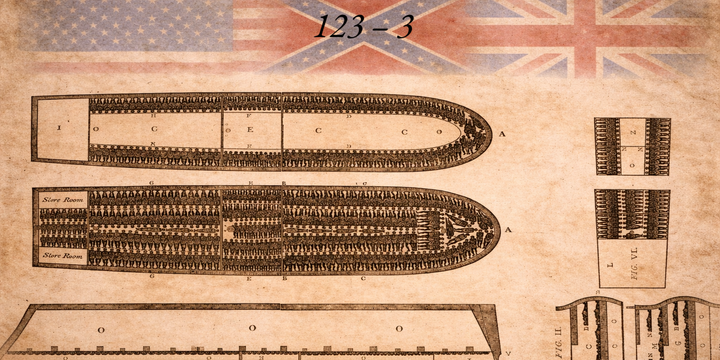
With everything else going on, some big news happened recently. The big newspapers here mostly missed it or buried. Thankfully, The Guardian had a story on it, which brought it to my attention.
On March 25, 2026, the United Nations General Assembly adopted Resolution A/80/L.48. This resolution declared the transatlantic slave trade and the enslavement of Africans the gravest crime against humanity. It also called for reparatory justice for its descendants. The vote was 123 to 3.
The US told the world chattel slavery was legal
The United States voted no.
It did not abstain, which is common in such matters.
It voted no.
Explaining the vote, it stated its official position plainly:
[America] "does not recognize a legal right to reparations for historical wrongs that were not illegal under international law at the time they occurred."
Think about that for a moment.The official position of the United States government on the kidnapping, transport, sale, and enslavement of millions of African men, women, and children is that it was fine; it was legal.
Not a tragedy. Not a crime against humanity. Fine. A lawful transaction. A feature of the global economy, not a bug.
This is America's original sin, and its effects still pervade this society.
What chattel slavery was
The legal argument depends on your willingness to forget. So, this bit of history is what we are talking about.
For more than four hundred years, twelve to fifteen million African men, women, and children were abducted from their homes. They were force-marched to coastal fortresses and loaded onto ships in conditions designed to maximize cargo and minimize the cost of death.
Those who survived the Middle Passage—and many did not—were sold at auction, classified as property, stripped of their names, their languages, their religions, their families, and their futures. They could be bred, beaten, rented, mortgaged, raped, and killed. Their children were born into the same condition, inheriting not freedom but ownership. This is what chattel means. Not enslaved in the general sense. Owned. Like land. Like livestock.
Permanently, from one generation to the next.
We know the role of the U.S., but Britain was no bystander in this system. It created it. By the eighteenth century, British merchants dominated the transatlantic slave trade, operating out of Liverpool, Bristol, and London, carrying more enslaved Africans across the Atlantic than any other nation. The Royal African Company held a Crown-granted monopoly on the trade from 1672.
When that monopoly was broken and the trade opened to private merchants, the volume didn't decrease—it exploded. British capital financed the ships, the forts, the plantations, and the insurance markets that made the whole machinery profitable. Lloyd's of London insured the cargo. The cargo was human beings.
When Britain passed the Abolition of the Slave Trade Act in 1807 — the date the UN now commemorates, the date chosen for the International Day of Remembrance—it did not free a single enslaved person. It banned the trade while leaving the plantation system it had built fully intact. Emancipation for Britain came in 1833, after decades of sustained abolitionist pressure. Even then, it arrived with a condition that should have been a scandal and has instead been mostly forgotten: £20 million in compensation, paid not to the people who had been enslaved, but to the people who had owned them.
That sum represented roughly 40 percent of the British government's annual budget at the time. The British taxpayer finished paying off the debt compensating slaveholders for the loss of their human property in 2015. People alive today paid it.
The economy that made the United States a global power was built on this system. The cotton that fed British and American textile mills. The sugar that sweetened European tables. The tobacco, the rice, the indigo. The financial instruments (insurance policies, mortgage-backed securities, bonds) that financed the plantations and the trade itself.
The wealth generated by chattel slavery didn't stay on the plantation. It moved. It capitalized banks. It built universities. It funded political careers. It compounded. It is still compounding. The enduring racial wealth gap in America is not a coincidence or a cultural artifact. It is a balance sheet.
The resolution the United States voted against named all of this. It described the transatlantic slave trade and chattel slavery as the gravest crime against humanity,
"by reason of the definitive break in world history, scale, duration, systemic nature, brutality and enduring consequences that continue to structure the lives of all people through racialized regimes of labour, property and capital."
That is a precise and accurate description. The United States looked at that language and voted no.
The legal argument is not a legal argument
"Not illegal under international law at the time" deserves careful deconstruction, because it does a lot deal of dishonest work.
International law is not received laws a priori. Nation states make it over time to reflect their interests and power. Those that made international law in the sixteenth, seventeenth, and eighteenth centuries were, in significant part, the same ones conducting and profiting from the transatlantic slave trade. Of course they didn't write laws against it. They practiced it. Pointing to the absence of those laws as a defense is like an arsonist citing the lack of a fire code.
Follow this logic to its conclusion. The Holocaust was not illegal under German law at the time it was occurring. The legal apparatus of the Third Reich authorized and administered it. Does the United States believe that forecloses their accountability? Nuremberg argues otherwise.
The colonial seizure of indigenous lands across the Americas was conducted under legal frameworks specifically constructed to authorize it. Does legality at the time of commission settle the moral and political question of remedy?
The answer has been no. Civilization eventually decided that some things are wrong independent of whether the perpetrators wrote them into law.
The US delegate offered a second argument: that calling chattel slavery the gravest crime against humanity implies a hierarchy among atrocity crimes, which "diminishes the suffering of countless victims and survivors of other atrocities." This is a remarkable position from a country that just voted against acknowledging one of the atrocities in question. The concern for comparative suffering rings somewhat hollow when your vote is actively denying the suffering you claim to be protecting. Seems on brand for our current administration doesn't it.
Deputy US Ambassador Dan Negrea knows all this. This is not a legal argument. It is a political argument dressed in legal language. What it is protecting is not a principle. It is an inheritance.
The theft didn't stop with the ships
The resolution also called for the restitution of cultural artifacts taken from African nations and peoples during the centuries of the slave trade and the colonial exploitation that followed it. This means the art, monuments, documents, national archives. (hello, British Museum.) This demand was rejected along with everything else.
This is more than a symbolic recognition. The systematic destruction and theft of African cultural production, including languages suppressed, religions criminalized, art looted, histories erased, was not incidental to chattel slavery. It was integral to it.
You cannot hold human beings as property without first stripping them of their humanity, and you cannot strip them of their humanity without destroying the cultural inheritance that grounds it. Cultural genocide was not a side effect of the transatlantic slave trade. It was a method. The demand for restitution is a demand to acknowledge that the theft did not end when the ships stopped running.
The United States voted against that too.
Who we stand with: 123 to 3
The vote was 123 to 3. One hundred and twenty-three nations looked at this history and said: this was wrong, this demands remedy, this cannot be resolved by waiting for the people it damaged to die.
The United States stood with Argentina and Israel and said no.
Fifty-two nations (including most of Europe) abstained, including the United Kingdom. This is the country that:
- Built the dominant machinery of the transatlantic slave trade
- Held a Crown monopoly on human trafficking
- Collected £20 million in slaveholder compensation and finished paying it off eleven years ago
It's acting ambassador spoke about commitment to adressing "root causes" and the "scourge of modern slavery." The redirect is deliberate. Acknowledge the legacy in the softest possible terms, pivot to contemporary trafficking, and quietly protect the inheritance. Britain didn't have the nerve to vote no. It also didn't have the integrity to vote yes. It abstained, which is its own kind of answer.
Europe's hands are no cleaner, whatever the abstentions imply. But the United States didn't have the decency to abstain. It voted.
Ghana led this resolution. Ghana's coastline is still marked by slave forts where millions of human beings passed through the door of no return. Ghana's President John Dramani Mahama, a key architect of the resolution, said before the vote:
"Let it be recorded that when history beckoned, we did what was right for the memory of the millions who suffered the indignity of slavery."
One hundred and twenty-three nations followed.
The country that built the most powerful economy in human history on the labor of the people who passed through that door said the quiet part out loud.
It always has. And still does.
This is what they glorify
The lost causers flying Confederate battle flags everywhere.
The legislators dismantling DEI programs and banning books that tell the history of race in America.
The school boards scrubbing the word slavery from curricula and replacing it with "involuntary relocation."
The politicians who call reparations radical while sitting in buildings constructed by enslaved labor.
And the diplomat in New York, in 2026, hiding behind international legal theory to avoid saying that what we did was wrong and that wrong demands remedy.
These are not separate phenomena. They are the same refusal, expressed in different registers, protecting the same inheritance. The Confederate monument and the UN vote are the same gesture. The book ban and the legal objection are the same argument.
Our inheritance as a nation is built on it: chattel slavery.
Our inheritance is the wealth, the power, the political architecture. The project has alway been to avoid accounting for how it was acquired.
The resolution the United States voted against this week did not demand the impossible. It did not set a dollar figure or establish a tribunal. It asked for acknowledgment. For a formal apology. For a framework of conversations about what remedy might look like. For the return of what was stolen. For the recognition that the gravest crime against humanity was, in fact, a crime.
Our United States said no.
One hundred and twenty-three nations said otherwise.
The world is watching for history. The United States has made its position clear. It has been making it clear for two hundred and fifty years.
Now we must pick up the pieces and hold them all to account for all those lives.
Non in cautus futuri.
(Editor's note: this piece is 1865 words long.)