Extra! It’s always the racism
The Supreme Court gutted the Voting Rights Act in Louisiana v. Callais this week. It's not a voting rights story. It was always a racism story. From the Court to the Pentagon to ICE to immigration, one movement is telling us exactly who they are.

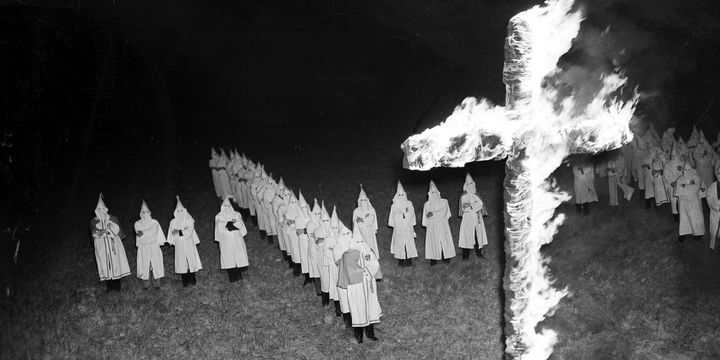
On Wednesday morning, the Supreme Court of the United States finished what it started (as covered here before). In a 6-3 decision written by Justice Samuel Alito, Louisiana v. Callais effectively gutted Section 2 of the Voting Rights Act of 1965. It didn't strike it down, but it rewrote it into something unrecognizable.
To win a Section 2 claim now, plaintiffs must demonstrate an “objective likelihood of intentional discrimination.” Congress didn’t write that standard. The Court invented it. Legislating from the bench, which they purport to abhor. And the Court knew exactly what it was doing.
This is not a voting rights or redistricting story. It is a racism story. It has always been a racism story.
The things that got us here
Here is what the Court held. Louisiana drew a congressional map in 2022 that gave Black voters who comprise roughly a third of the state’s population meaningful representation in exactly one of six districts. A federal court found that this violated the Voting Rights Act. The court ordered a remedial map with two majority-Black districts. As the Voting Rights Act intended.
But then a group of “non-African American voters,” assembled by conservative lawyers, sued to block the remedy. The three-judge panel agreed with them. And so did the Supreme Court. Think about this. The original map diluted Black voting power. A court ordered it fixed. The fix was then declared the constitutional violation. The remedy is now the crime.
Alito's majority held that because the Voting Rights Act didn't require Louisiana to create a second majority-Black district because no compelling interest justified using race in drawing the map (under the newly tightened Gingles framework). But partisan goals, however, are just fine. They always have been, since Rucho v. Common Cause (2019) placed partisan gerrymandering beyond federal court review.
Put these together and you have arrived at the Court's destination. All gerrymandering is now constitutional. Discriminate by party. Discriminate by race dressed as party. The courthouse door is closed. No remedy now exists.
Justice Kagan, announced her dissent from the bench with what Chris Geidner at Law Dork described as "anger simmering just below the surface." She called Callais "the last piece" in a decade-long effort to "destroy" the voting rights law, making it "nearly impossible" to succeed in bringing a constitutional vote-dilution claim, the last real task the law was still accomplishing. The NAACP Legal Defense Fund had warned during oral argument that further neutering of Section 2 would resurrect the 15th Amendment as a mere “parchment promise." They were right. It is now just paper and nothing more..
And the damage does not stop at congressional maps. Rep. Terry Landry Jr., a Louisiana state legislator and former state policy director for the Southern Poverty Law Center, warned before today's ruling that gutting Section 2 "will affect the state legislatures. This will affect city councils. It will affect school boards. You will see a huge impact on minority representation at every level of government." Every level. The courthouse door is not just closed for Congress. It is closed.
The common thread
I have been following Callais on this site since the case began to climb toward the Court. None of this is a surprise.
It is a denouement.
In 2013, Shelby County v. Holder gutted Section 5. This was the preclearance provision that required states with histories of voter suppression to get federal approval before changing their election laws. Chief Justice Roberts, writing for the majority, declared that the "extraordinary measures" of the Voting Rights Act were no longer necessary because conditions had changed. They had not changed. They changed back.
In 2021, Brnovich v. Democratic National Committee weakened Section 2's application to voting restrictions. It now made it much harder for plaintiffs to challenge discriminatory laws. The standard tightened. The opening narrowed.
Today, it is closed.
This was not drift.
This was not the accidental accumulation of jurisprudence.
This was a plan, executed across decades, by a legal movement that understood precisely what it was doing and why.
Alito wrote Wednesday's opinion. But the hand behind it belongs to John Roberts. As a young Reagan administration lawyer in the early 1980s, Roberts opposed the 1982 amendments to the Voting Rights Act—the very amendments that established the effects test Callais just interred. He has pursued this result ever since, through Shelby County, through every erosion of pre-clearance, through forty years on the inside of the federal judiciary.
Wednesday was the culmination of his project, not Alito's. He just let someone else sign it. It was the end of his long play. Now we just wait for Fortenbras to clear the wreckage.
But it wasn't just Roberts. An outside architect of this also has a name: Edward Blum, a former stockbroker turned anti-civil-rights litigant whose Project on Fair Representation brought the case that gutted preclearance in Shelby County, then built Students for Fair Admissions to kill race-conscious college admissions, and filed amicus briefs in Callais at every stage.
Blum's operation is bankrolled by the DonorsTrust dark money network. The president of it once boasted that his organization's "DNA floats in the bloodstream" of groups like Blum's. The Federalist Society supplied the bench. Blum supplied the cases. The same framework that ended race-conscious college admissions in 2023 has now been applied to the fundamental right to vote. "Colorblind" constitutionalism marches on, indifferent to the world it actually produces.
A Lost Cause found
There is a word for the use of facially neutral principles to enforce racial hierarchy. The word is not "colorblind." The word is "Lost Cause."
After Reconstruction, the Redeemer governments of the post-Civil War South did not need to say "we are disenfranchising Black voters" out loud. They had poll taxes, literacy tests, grandfather clauses, and white primaries. The tools were race-neutral on their face. Their purpose and effect were not. The 15th Amendment became, in the phrase the NAACP Legal Defense Fund used last October in oral argument, a "paper guarantee."
The Voting Rights Act passed in 1965, and President Johnson signed it into law weeks after the beatings on the Edmund Pettus Bridge, precisely because the Constitution's guarantees had proven insufficient against the ingenuity of those determined to nullify them. Today's Court has returned us to that baseline. The guarantee is paper again. The legal machinations won.
This is the through line. It runs from Redemption to massive resistance to the architecture of "colorblind" law. The tactics change. The goal does not.
This is who they are
The Court is not alone. It does not operate in a vacuum.
Pete Hegseth is purging the military of officers he deems insufficiently ideologically aligned, presiding over a Pentagon wrapped in Christian nationalist iconography, dismantling diversity programs with a fervor that is, at its root, about who belongs in the institution and who does not. It is not a warrior ethos story. It is a racism story.
ICE is conducting mass deportations at a scale and speed that targets communities by ethnicity, by language, by the color of skin that agents have been documented using as a proxy for suspicion. The administration does not call it ethnic cleansing. The administration does not need to. The actions name themselves.
The Supreme Court has told Black Americans that the remedy for their disenfranchisement is itself unconstitutional. The Pentagon has told non-white service members that their presence is a problem to be solved. ICE has told brown-skinned communities that their papers are never quite enough.
And then there was this. On the same day, the Court heard Mullin v. Doe and Trump v. Miot, the administration's bid to strip Temporary Protected Status from hundreds of thousands of Haitian and Syrian refugees, mostly people of color, without judicial review. During oral arguments in these cases, Alito asked whether Syrians, Turks, Greeks—and then, drawing laughter from the courtroom, "southern Italians"—would be considered non-white for purposes of an equal protection analysis. Plaintiff's counsel answered him directly and correctly: 120 years ago, during the last great wave of European immigration, southern Italians were in fact not considered white. "Our concept of these things evolves over time," the lawyer said.
Minutes after gutting the mechanism Congress built to protect Black voters from discrimination, Alito expressed bewilderment at the history of American racial classification. Whether that performance was ignorance or theater, the effect is the same.
What has changed is that they are no longer maintaining the fiction. Alito's opinion does not pretend to be colorblind. It calls the correction discriminatory. The mask has not slipped. The mask has been removed and set on the table, and the majority has looked into the camera.
These are not four separate stories. They are one story, told by one movement, in four acts.
Fascism has racism in its cold, dead, greedy heart. This has always been true—Umberto Eco named it, history confirmed it, and the present tense is confirming it again. The ideology requires an enemy. The enemy is always, in the end, the same. The other.
They are telling us who they are.
They just now wear black robes instead of white ones.
The only question that remains is what we intend to do about it. First, rage. Then, fight.
Non incautus futuri.