Trump's DOJ Thinks the Klan Had a Point
Trump's DOJ has indicted the SPLC for infiltrating the Klan. In 1981, the Klan's own publication made the same objection. The FBI spent decades using identical tactics against civil rights groups. Trump's Justice Department has decided the Klan had a point.

We know the pattern. We've seen it play out before. The Trump administration has made little secret of its sympathies. It deploys federal power with increasing directness on behalf of white grievance. The Secretary of Defense has enacted it wantonly.
Last week, acting Attorney General Todd Blanche, with FBI Director Kash Patel at his side, announced the indictment of the Southern Poverty Law Center (SPLC). This is only the latest and most explicit example yet.
An indictment for attacking white supremacy
The DOJ charged the SPLC with eleven counts. The charges span wire fraud, false statements to a federally insured bank, and conspiracy to commit money laundering. All of these stem from SPLC's discontinued practice of embedding paid confidential informants inside white supremacist organizations, including the Ku Klux Klan. Yes, those guys.
How did they the fraud theory? Donors weren't told the program existed. The bank charges? SPLC used dummy company names to pay its informants, which is how you pay informants whose cover you are trying to protect. The indictment, to its credit, explains this in detail. Blanche, however, ignored what his own document said. Maybe he had a different document in mind.
"The SPLC was not dismantling these groups," Blanche told reporters. "It was instead manufacturing the extremism it purports to oppose by paying sources to stoke racial hatred." The DOJ's own indictment describes informants who couldn't receive direct SPLC paychecks precisely because of the danger their exposure would create.
That's not manufacturing extremism. That's operational security in service of civil rights intelligence work; work that, as SPLC interim CEO Bryan Fair noted, the organization shared with law enforcement, including the FBI. Fair put the program in its proper context:
"When we began working with informants, we were living in the shadow of the height of the Civil Rights Movement, which had seen bombings at churches, state-sponsored violence against demonstrators, and the murders of activists that went unanswered by the justice system."
There is no question, Fair added, that what the informants reported saved lives.
It is also worth noting that the Biden administration looked at this same set of facts and declined to bring charges. Blanche revived the investigation after Trump's return to office. When asked why, he offered no explanation.
This is not the first time a legal body has objected to the SPLC's practice of placing sympathizers inside Klan organizations to gather intelligence. \
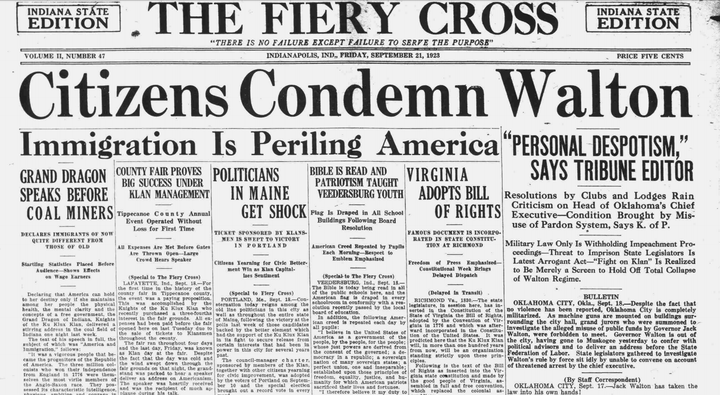
In 1981, the United Klans of America complained in its official publication, The Fiery Cross, that SPLC's new Klanwatch program was "extremely dangerous to American freedom." This is the organization that beat the Freedom Riders, murdered civil rights worker Viola Liuzzo, and bombed Birmingham's 16th Street Baptist Church. The language Blanche used on Tuesday is not analogous to the Klan's objection. It may not quote, but it rhymes.
Who the FBI was really watching
But first, we should look at history. The FBI spent decades doing to civil rights organizations what SPLC did to the Klan. COINTELPRO—the Bureau's counterintelligence program, running from 1956 into the 1970s—used paid informants, infiltration, psychological warfare, and legal harassment to disrupt, discredit, and destroy domestic dissident groups, with Black civil rights organizations as its primary target.
The tools were identical to what SPLC employed. An informant inside the organization, the dummy account, the covert payment, the intelligence gathered and passed to law enforcement. The federal government ran that playbook against the movement SPLC defended. SPLC was founded in 1971, at the tail end of COINTELPRO's run, into a world where the Justice Department had spent fifteen years protecting white supremacy by destroying its opponents.
It stepped into that vacuum and turned the toolkit around. Now Trump's DOJ is prosecuting it for doing so. No rhyming detected. The wheel hasn't turned. It's the same wheel.
Back to a troubled source
Which brings us back to The Fiery Cross and its legal staff. They understood Klanwatch's purpose well in 1981 and said so in terms that would not be out of place in Blanche's Tuesday press conference. The United Klans of America knew what SPLC was doing and why. So does Blanche. Chris Geidner at Law Dork nails the landing. It's not whether Blanche understands this because of course he does. The question is what it tells us that he is pretending otherwise, and using the criminal law to do it.
The last time the federal government effectively sided with the United Klans of America's arguments against the SPLC, the Klan got a different kind of legal proceeding. In the late 1980s, SPLC brought suit on behalf of Beulah Mae Donald, whose 19-year-old son Michael had been lynched by two members of the United Klans of America. The judgment bankrupted the organization.
The United Klans of America, which had beaten, murdered, and bombed its way through the Civil Rights Movement, was destroyed by a civil rights organization that refused to let it operate without consequence. The federal government had no part in it.
The forfeiture allegations attached to the indictment make the ambition explicit. A conviction could open the door to claiming the SPLC's donated funds in their entirety. The organization that bankrupted the Klan may now find itself bankrupted by a DOJ that has decided the Klan's objections deserved a second look.
We know all where this DOJ is heading.
Non incautus futuri