Lemon was a man
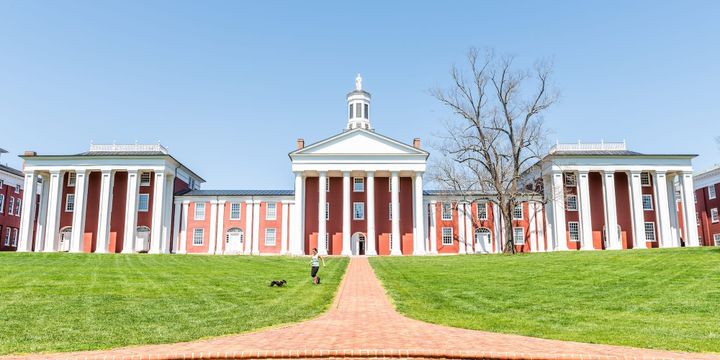
William & Mary owned a man named Lemon. It named a scholarship for him and reckoned, at last, with its slaveholding past. The Justice Department has now entered that reckoning into evidence—and opened a civil-rights investigation into the college for it.

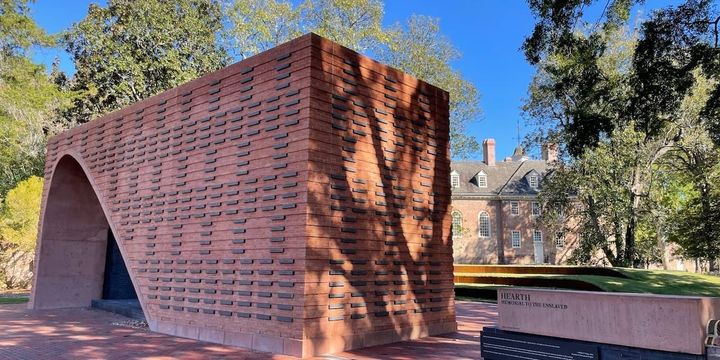
The College of William & Mary owned him along with an unknown number of others from its founding until the Civil War. In 2021 the law school named a scholarship after him—five full rides for graduates of historically Black colleges. This was one small piece of the university's long, halting effort to account for having been, for most of its existence, a slaveholder. (Full disclosure: I graduated from William & Mary; I make that disclosure because what follows is about a place I attended and love.)
On August 17, the Department of Justice opened a civil-rights investigation into the college for it.
The review proceeds under Title VI, and the letter is signed by Harmeet Dhillon, Assistant Attorney General for Civil Rights. Title VI bars institutions that take federal money from discriminating by race. Congress wrote this in 1964 to pry open segregated universities. Dhillon has turned it around to face the other way.
Her letter to William & Mary's counsel states that the Department "has reason to believe" the college awards scholarships and benefits using "race-based criteria." Further, it demands the documents to prove it by September 8. The government asserts it may pull student records, which are otherwise protected under FERPA, without consent. If the college is found in violation and will not settle, the letter promises the consequences plainly. It will suspend, terminate, or refuse federal funding, and bring a civil suit.
This is the third such review of a Virginia university in two years. The University of Virginia settled, and its president resigned. George Mason received the same letter in July 2025 and remains under investigation (one of several federal probes it now faces). The letters are near-identical—the openings run word for word, only the school names have been swapped in and out.
The letter states what the government means by "race-based criteria" directly. It is worth reading, because the words in it are the argument.
Among the programs Dhillon's letter cites is the W&M Scholars program, an undergraduate scholarship covering in-state tuition. Its offense: the college gives "top consideration" to applicants with "an interest in diverse people and perspectives." Not applicants of a particular race—applicants interested in diverse perspectives. The word "diverse," appearing on a public webpage, is entered as evidence. (Full disclosure again: I'd have qualified for it had I enrolled there—a white man of the right background.)
The letter continues through the programs:
- The School of Education's Martha L. Muguira Fellowship, need-based, prefers Hispanic and Latino women.
- The Holmes Scholars program mentors doctoral students to "develop future education leaders of color."
- The Reaching Back Scholarship prefers graduates of HBCUs or those "who contribute to the diversity of the Law School."
- The Virginia Teaching Scholarship Loan Program, a state loan for future teachers, flagged because the college describes its nominations as "an incentive to increase the diversity of persons pursuing careers in teaching." No race anywhere in it. The word "diversity" is the offense.
And then the letter reaches for things that are not scholarships at all:
- The Donning of the Kente, a graduation ceremony, flagged because an archived version of its webpage once described it as "for students of color."
- A promotional flier, posted October 4, 2022, by the W&M Student Assembly—the student government—to its Instagram account, for a two-day panel with Howard University to "promote Black Excellence in the legal field."
The Department found the first by going through the college's historical pages on the Internet Archive's Wayback Machine. The second, from a student government account. They found a graduation ceremony and a student government's Instagram post, and they pulled those into a federal civil-rights file.
The Lemon Legal Scholars Program is the centerpiece. Here the letter confesses. To establish the program's intent, Dhillon quotes the college's own account of itself. She notes that the scholarship takes its name from the Lemon Project, which William & Mary describes as "a multifaceted and dynamic attempt to rectify wrongs perpetrated against African Americans by William & Mary through action or inaction." She quotes the college's statement of what those wrongs were: that it "owned and exploited slave labor from its founding to the Civil War," and that it "failed to take a stand against segregation during the Jim Crow Era."
That is the confession. The college admitted it, in public, and it owned it. But the government has entered it into the record as proof of wrongdoing—not the slaveholding, but the reckoning with it. The acknowledgment is the evidence. Dhillon's letter invokes what she calls, in the announcement, "our color-blind Constitution," and deploys it to investigate a school for the offense of having looked squarely at the fact that it was not, for most of its history, permitted to be colorblind, because it owned people.
It's plain. A college enslaved a man named Lemon. Generations later it admitted this, named a scholarship for him, and set about the attempt to repair it. The federal government has now cited the admission, the scholarship, and the atonement as grounds for stripping the college of its funding. The offense is remembering and trying to rectify the fact.
This is an old tradition. It is the oldest move in the region's political grammar. The party that tries to reckon with reality is recast as the party at fault, the act of memory recast as the aggression.
The Lost Cause never required anyone to argue that slavery was just. It required only that the men who fought to preserve it be remembered as honorable, and that those who insisted otherwise be treated as the ones causing the trouble. The machinery has not changed. It has only acquired a government letterhead. It no longer needs to win the argument about the past. It uses its power to make remembering illegal
William & Mary has until September 8.
Non incautus futuri