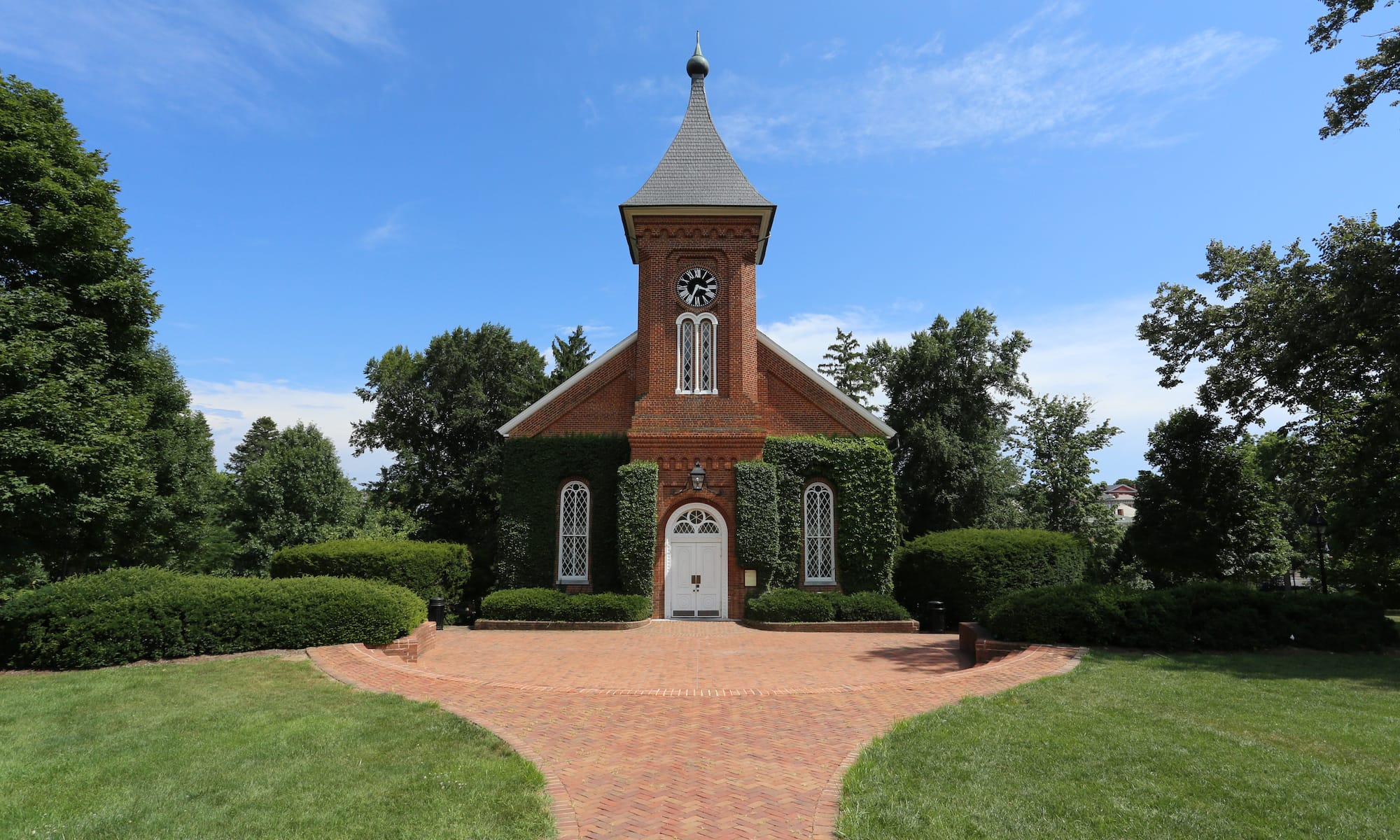
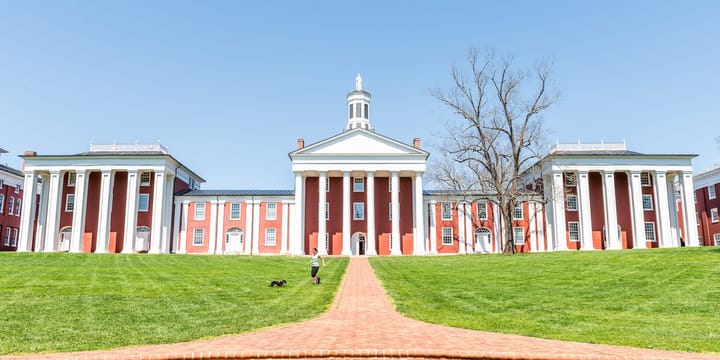
The museum isn't built yet. The excuses are
Washington and Lee's motto means "not unmindful of the future." Seven years into a commitment to honest historical interpretation, the university is building a museum while simultaneously writing a policy that its own faculty say contradicts everything the museum is supposed to stand for.

Well, it looks like were are back to our original mission: holding the University's administration to account and keeping their feet to the fire.
As we know, in 2018, Washington and Lee's Board of Trustees approved a Strategic Plan committing to create an Institutional History Museum—a facility to tell "the full and rich history of the university, its people, traditions, and impact throughout the arc of the nation's history." Seven years on, the museum only exists as an artist's rendering, a parking lot earmarked for construction, and a series of carefully worded institutional statements.
That gap is not a scheduling problem. It is a character problem. And now, quietly posted to the museum's website, there is a new policy that one of W&L's own faculty says may make that character problem permanent.
And disagreement with this policy is also coming from the stick fort. Strange bedfellows indeed. How that thing about blind nuts and squirrels go?
The policy nobody asked anyone about
A new line on the Institutional History Museum website states:
"All interpretive interactions based on the history of the sites, its collections, or related history are the sole responsibility of official W&L personnel."
Noted friend of Not Unmindful, W&L anthropology Professor Alison Bell—a W&L alumna ('91), 20-year faculty member, and the university's own archaeologist of its 18th-century foundations—says this policy was published without any faculty consultation. Director Matthew Davis has informally assured her it won't affect teaching or research. But Bell told The Ring-tum Phi's reporter Amelia Lanier that informal assurances don't override published language:
"If you read this policy literally, it will affect me. Only museum staff are considered official W&L personnel able to interpret the history of the university. That would exclude faculty and students."
Bell teaches a course called Collective Memory that relies on university artifacts. She related her students' reaction when hey read the policy. "They were really shocked when they saw this and couldn't understand why Washington and Lee would promulgate this."
Ignoring experts is sadly on brand.
Davis defended the policy by citing comparable restrictions at the Louvre and the National 9/11 Memorial. Bell's response identifies exactly why that comparison fails:
"Mr. Davis told me that this policy is based on procedures in place at the 9/11 memorial. Among them, it says that with school groups, teachers can't lead lectures or tours for their students, that only museum staff can do that. He says that's the model. So the model does seem to be that the museum staff really have ownership of the university exclusively."
The Louvre and the 9/11 Memorial serve general public audiences. Washington and Lee is a teaching university whose faculty are the leading scholarly authorities on its own history. Granting exclusive interpretive authority over artifacts Bell spent a career unearthing to administrators who weren't there for the excavation and are paid to serve the University's agenda is not an operational best practice. It is asserting a power hierarchy.
n a letter published in the W&L Spectator in February 2025, Bell also wrote:
"The Liberty Hall Farmhouse 'lab' and two temporary spaces in Early Fielding are wildly, embarrassingly below state and federal standards for artifact curation, as administrators have been made aware for more than two decades. The 1793 Steward's House was restored a year ago but cannot be used effectively: it lacks interpretive signage and is inaccessible to anyone not able-bodied or in possession of a four-wheel-drive vehicle. Archaeology faculty who asked how it would be maintained were given a leaf blower to use. W&L likes to capitalize on its 18th-century history but doesn't materially care for it."
This is not a disgruntled faculty member venting at the margins. This is the person who has done more than any administrator to recover W&L's material past. The Ring-tum Phi's earlier reporting on the archaeology program surfaced an even sharper legal exposure: "We don't own them. We curate them, and there are laws regarding the curation of federal artifacts," Bell said. "We don't meet those."
The record to date
The 2021 Commission on Institutional History found that graduating students couldnot explain the university's ownership of enslaved people or why the school bears a Confederate general's name. It further warned that historical vacuums invite outsiders to impose their own narratives on spaces like Lee Chapel. (And we know just who those forces are.) The university responded with promising language, a new director, and museum plans.
But the paper has done most of the work.
The Lee Chapel basement museum has been closed for five years. Seventeen of twenty plaques removed from the chapel in 2021 remain in storage with no confirmed destination. The museum has cycled through two directors and two proposed locations. A groundbreaking has not been announced. Lee's office remains "unaltered." The Lost Cause framing that the Commission explicitly identified still operates, by default.
And now this policy dropped—without any faculty input . Read literally, it strips the most qualified interpreters of W&L's history of their authority to interpret it.
Professor Bell asks for the right standard
Bell isn't asking for a fight. She's asking for basic institutional integrity:
"We need to do what we say and say what we do. So if it's published online, it needs to be our real practice."
An uncomlicated fix is right there if they choose to do it:
- Revise the language
- Explicitly bring faculty into the interpretive framework
- Make the policy reflect what the institution claims to believe
None of this has happened. Only informal reassurances have been offered in place of any formal course of correction.
Who gets to tell W&L's story?
A museum that gives exclusive interpretive authority to administrators—over the objections of the scholars who built the historical record it claims to honor—is not an overdue reckoning. It is a tepid rebrand.
Those of us who take W&L's motto seriously must insist that its practice match its language. All of us should not let a policy published without consultation, justified by a faulty analogy to a 9/11 memorial, stand as the last word on who gets to tell this university's story.
It's a promise past due for the University reckoning with its past. We, however, intend to keep the promise of:
Non Incautus Futuri.