Philip Meredith freed his own damn self
There is no portrait of Philip Meredith, only an X on a government form. Lee wouldn't file the paperwork to free him, so Meredith filed it himself.


There is no portrait of Philip Meredith. No photograph, no sketch, no likeness anywhere in the record. There is nothing like the stereo view of Selina Gray that turned up on eBay in England and now hangs at Arlington House.
There is only a clerk's physical description on a government form: "Dark Copper Color about 5 ft 4 inches" and an X where his name should be. That's the entirety of what Philip Meredith left behind for us to look at.
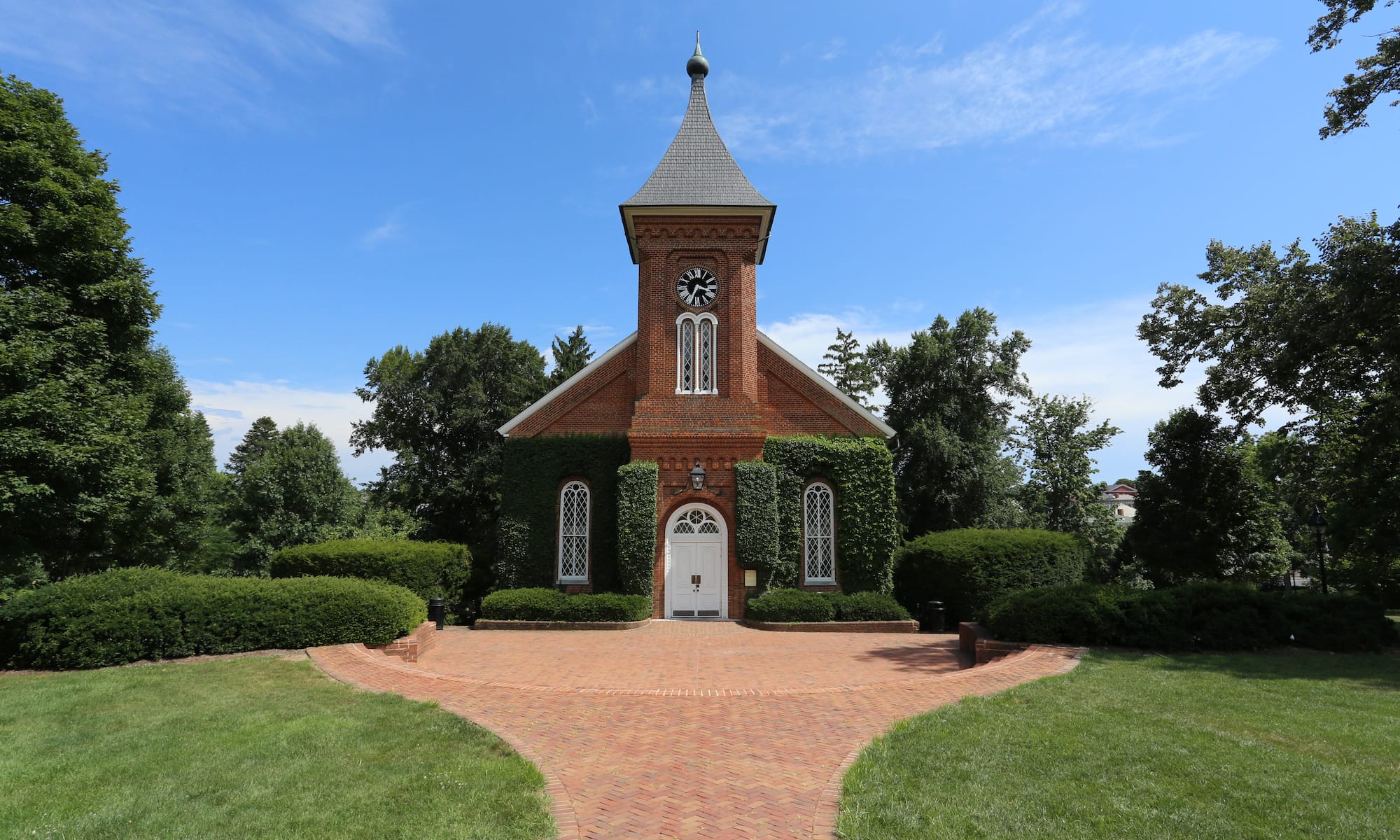
Robert E. Lee, meanwhile, is carved in marble at one and a half times life-size, asleep under his own full name and dates, in a chapel at a university that still bears the name. One of these men has a face history remembers. It is not the one who was actually enslaved.
For roughly thirty years, Philip Meredith belonged to Robert E. Lee. Not to Arlington. Not to the Custis estate Lee administered, but to Lee, personally. The one relationship early Lee hagiography insists barely happened and the one that survived every account written to make Lee bearable.
Nobody freed him. He freed himself. He filed his own petition with a federal commission—the paperwork his owner wouldn't file—after Lee had already run south to fight a war to keep men like him enslaved. That story is sitting in the National Archives. It has been sitting there since 1862. Three institutions had every resource to get this right. They didn't. It took one alumnus checking the files himself and reporting his findings on social media.
All the institutions got it wrong in exactly the direction you'd expect.
The file
In April 1862, Congress freed every enslaved person in the District of Columbia and set up a commission to process claims. Philip Meredith filed his petition under that act, because the man who owned him hadn't bothered to. The form itself says why:
"General Robert Lee of Virginia... having refused or neglected to file in your office the statement in writing... you will please file this petition... in lieu thereof."
Lee was busy. He'd joined a rebellion to keep Meredith enslaved. Freeing him wasn't the point.
Meredith couldn't sign his own name. The petition is marked with his X. Age thirty, "Dark Copper Color about 5 ft 4 inches," was the clerk's physical inventory of the man asking the government to certify he wasn't property anymore.
The supporting evidence comes from James Eveleth. Eveleth was the agent Lee had put in charge of Meredith in 1852—leasing him from Lee, collecting the wages Meredith earned, handling his arrangements, and answering to Lee for the proceeds. Eveleth testified he'd known the "servant" for thirty years, that Lee "left servant in District" when he went south, and—this is the line that ends up doing all the work later—that he'd had "frequent conversations with Gen Lee in which Gen Lee expressed regret that he owned servant & wished he was free."
Attached to that is a receipt from 1854: Meredith's wages passing through Eveleth's hands to Lee, seven dollars and fifty cents on top of fifty-one dollars already collected "at different times," credited against the "Service due" Lee. Whatever regret Lee expressed to his agent, it did not translate into a manumission paper, and it did not stop him from collecting the earnings of a man he claimed to wish were free—for at least eight years running, right up until the war took him south and a federal statute did what Lee never had.
That is the entire record. No sensation. No hearing. A dark-copper man in his thirties who could not write his name, asking a wartime commission to certify what his enslaver would not.
What the National Park Service page leaves out
Arlington House—the federal memorial to Lee, rehabilitated in 2021 with $12.35 million—has the explicit mandate to stop telling the story as hagiography. Its website includes a page titled "Robert E. Lee and Slavery," a genuinely useful resource for anyone working this history. It cites an 1852 lease document as "the last direct evidence that Lee still owned enslaved people," and states: "There are no records of Lee freeing or selling any of them."
Both claims come up short. The Park Service's own footnote for the 1852 document is a dead link to leefamilyarchive.org. With a bit of searching, though, you can read it here—Lee's own hand, appointing Eveleth as agent to hire out "my servant Philip Minday." A reader following the Park Service's actual citation would never reach it.
What the document shows, once you find it, combined with the Meredith petition: the same agent, Eveleth, and the same enslaved man, in a relationship that ran unbroken until Lee left for the Confederacy—a full decade past the point the page treats as the end of the trail. The record has sat in an accessible archive the entire time, while the footnote points nowhere.
The page is valuable, and worth fixing rather than dismissing. But it is the U.S. government's official corrective to Lost Cause mythology, four years post-rehabilitation, last updated in 2024, and it still undersells how long and how directly Lee held a human being in bondage.
What a Wall Street Journal Best Book got backwards
Allen Guelzo's Robert E. Lee: A Life—a Wall Street Journal Best Book of the Year, praised across the ideological spectrum as the clear-eyed corrective to both hagiography and reflexive condemnation—tells the Meredith story with a twist. Guelzo writes that Meredith's petition was made "sensational by describing 'frequent conversations with Gen Lee in which Gen Lee expressed regret that he owned servant & wished he was free.'"
Read that again next to the actual document. That sentence is Eveleth's testimony. Word for word. It is not something Meredith said, described, or could have said—Meredith signed with an X and left no testimony in the file at all. Guelzo took his enslaver's agent's second-hand account of his enslaver's private feelings, and put it in the enslaved man's own mouth.
On the Law & Liberty Podcast, Guelzo went further, narrating a scene that doesn't exist: "this caused quite a ruffle of interest because here was General Lee's valet, and he's applying for emancipation in the District, so they interview him. And he says, well, you know, General Lee never liked slavery." Nobody interviewed Meredith. There is no "ruffle of interest" in the record. There is a form, an X, and another man's testimony about another man's regrets. Regrets that never once produced a manumission paper.
A researcher who found this a year ago wrote to Guelzo and Knopf requesting a correction. Nothing has been done. The paragraph in question has no endnote at all.
The error runs in exactly one direction. It takes the least flattering fact in the record—that Lee held a man in bondage for at least a decade after supposedly wishing he were free, and collected his wages the whole time—and replaces it with the oldest, most comfortable myth in Lost Cause literature: the enslaved man himself, testifying to his master's inner goodness. It doesn't matter whether Guelzo meant to do this. The effect is the same regardless of intent, and it's now sitting uncorrected in a book assigned in college classrooms as the fair-minded, non-hagiographic Lee biography.
Third institution, same file
Washington and Lee University is choosing its twenty-eighth president right now. The Generals Redoubt—the alumni group organized to defend the university's Lee-centric identity—has spent this search pushing exactly the reading that the National Park Service and Guelzo both, independently, arrived at. Lee as the reluctant slaveholder, morally uneasy, better understood in context, a man who wished things were otherwise.
Philip Meredith is the context. Thirty years enslaved. A decade of wages collected by Lee's agent and passed up to Lee. No manumission, ever, offered freely—only a wartime commission, a government form, and an X mark, filed the same month Lee's legal obligation to free him lapsed through his own neglect.
That is not a complicated man wrestling with a system. That is a man who held another human being in bondage for as long as the war allowed him to, whose agent's flattering account of his private regrets changed nothing about what he actually did.
Two well-resourced, credentialed institutions had access to this file. Neither read it correctly. The university whose name is still Lee's is about to choose someone to decide, again, how much of this it's willing to teach. The file didn't change. The question is whether the twenty-eighth president will read it.
Non incautus futuri.