The Board was the weapon
Three Virginia university leaders were forced out by Youngkin-appointed boards doing the Trump administration's DEI dirty work. George Mason's Gregory Washington survived. The difference was a new governor.

Three ousters. One survivor. One mechanism.
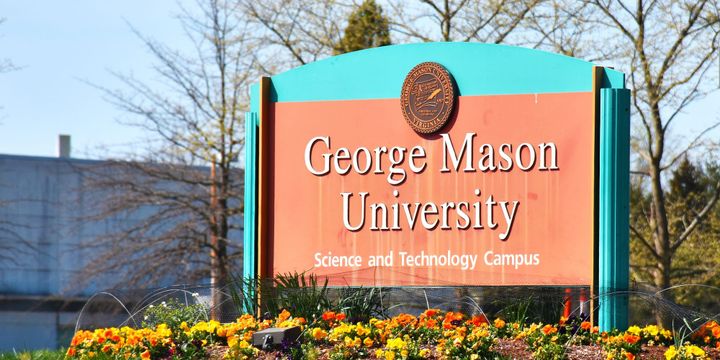
On Tuesday, George Mason University's Board of Visitors extended the contract of President Gregory Washington through June 30, 2031. Washington, their first Black president, had been under invstigation for the better part of a year. He faced demands that he apologize for running what the Trump Department of Education called an "unlawful DEI" program. He refused. His attorney called the findings "legal fiction." And he survived.
Three of his Virginia peers did not.
In the last fourteen months, the first Black superintendent of the Virginia Military Institute was ousted, the president of the University of Virginia was forced out by a Department of Justice ultimatum, and the president of Virginia Tech was pushed aside before a Democratic governor could reshape the board that would have protected him.
In each case, the mechanism was the same: a Board of Visitors stacked with appointees of Republican Governor Glenn Youngkin, carried out a MAGA-aligned purge of Virginia's public university leadership. Education as the enemy.
Washington's extension on Tuesday is not a feel-good postscript to that story. It is the proof of concept for how the story could have gone differently at every institution and didn't. Governor Spanberger arrived too late.
Act I: the mechanism
Boards of Visitors govern Virginia's public universities. Their members are appointed by the governor. The governor does not run the universities. The governor does not hire or fire presidents. The governor appoints the people who do.
Youngkin understood this. While in the office, he methodically populated university boards with ideologically aligned appointees. Some had direct ties to the Trump White House, while others were connected to the Heritage Foundation (of project 2025 fame). When the Trump administration launched its assault on DEI in higher education, those boards were already in place, ready to serve those ideological ends. In some cases they acted directly. In others they simply declined to resist when federal pressure arrived.
The result was a system working as designed.
Act II: VMI, setting the table
In February 2025, the Board of Visitors of the Virginia Military Institute voted 10-6 not to renew the contract of Superintendent Cedric T. Wins—the school's first Black superintendent, a 1985 VMI alumnus, and a retired Army major general who had served more than three decades in uniform.
The board did not cite performance. It cited nothing. Board President John Adams issued a statement thanking Wins for his service "during some very difficult times" and said nothing further.
Wins said plenty. In a statement following the vote, he called the decision "a partisan choice that abandons the values of honor, integrity, and excellence upon which VMI was built." He warned against focusing "on our distant past believing it will produce tomorrow's leaders of character."
This was a pointed remark at an institution that, until Wins, had held annual ceremonies honoring cadets who fought and died for the Confederacy, long celebrated Stonewall Jackson (who taught at VMI before leading Confederate forces in the field), and did not admit Black students until 1968 or women until a 1996 Supreme Court ruling forced the issue.
Wins had moved to change that culture. He oversaw the relocation of the Stonewall Jackson statue. He hired VMI's first chief diversity officer. He reformed a student-run honor court that had disproportionately expelled Black cadets. A state-commissioned report in 2021 had found that VMI "tolerated and failed to address institutional racism and sexism" and that "racial slurs and jokes are not uncommon." Wins was the board's answer to that report. Then, when the political winds shifted, the board's answer to Wins was a 10-6 vote in closed session.
Democratic State Sen. Jennifer Carroll Foy, a VMI alumna, said she had been told the board no longer wanted a Black superintendent. Republican Congressman Ben Cline responded by accusing Carroll Foy of intimidating board members. The board did not comment on Wins' statement.
Youngkin's diversity chief had visited VMI's campus in 2023 and announced, to mandatory faculty and staff training, that "DEI is dead." VMI's chief diversity officer, a Black woman, resigned later that year. The sequence was not subtle.
Act III: UVA, escalation
In June 2025, Jim Ryan resigned as president of the University of Virginia. He had served nearly seven years.
He did not resign voluntarily.
Ryan later described the circumstances as "a hostage situation." In a twelve-page letter to faculty senators that November, he wrote that he had been told by the DOJ that if he did not resign by 5 p.m. on June 26, the department would "basically rain hell on UVA"—cutting research funding, expanding investigations, withholding student financial aid. In exchange for his resignation, the DOJ offered what Ryan's account described as blanket immunity: all inquiries suspended, no financial penalties, agencies told not to cut off research funding.
The trouble, Ryan wrote, had begun when Youngkin's office drafted a resolution—the first time in Ryan's seven years that the governor's office had done so—dissolving UVA's DEI office. The board passed a modified, milder version. Youngkin then went on Fox News and announced that "DEI is dead" at UVA, overstating what the board had actually done and creating the impression that UVA was failing to comply with its own resolution. The DOJ picked up that thread.
As of July 1, 2025, all seventeen members of UVA's Board of Visitors had been appointed by Youngkin—including ex-Attorney General Ken Cuccinelli, whose appointment Virginia Senate Democrats had sued to block. The board accepted Ryan's resignation. Multiple observers noted at the time that the Trump administration's ability to strong-arm the situation depended entirely on who was sitting on that board.
"The administration can't necessarily control a university," one higher education analyst told Inside Higher Ed, "without—in some part—the university's consent."
Act IV: Virginia Tech, racing the clock
The most recent entry in this series is also the most nakedly tactical.
In April 2026, Virginia Tech President Tim Sands. who had served twelve years and steered the university through significant expansion, announced he would step down. The announcement was sudden. The university's statement was glowing. Sands offered no explanation.
Sen. Tim Kaine did not wait long to offer one. In a press call the following morning, Kaine said he was "deeply troubled" and that the departure had "the earmarks of previous well-publicized efforts to oust presidents at other Virginia public universities—VMI, UVA, and George Mason." He said he believed the Youngkin-appointed board was moving to install a new president before Gov. Spanberger could fill five board vacancies set to open on July 1.
Kaine said:
"I think there is a desire by certain members on that board to force him out,even though he doesn't deserve to be treated like that, so that the board can pick a president before Gov. Spanberger is able to put this administration's stamp on the Virginia Tech board."
As of Sands' announcement, thirteen of Virginia Tech's fourteen board members had been appointed by Youngkin. Spanberger had filled one vacancy the day after Sands announced his departure, but four more seats expire June 30, giving her the opportunity to reshape the board only after the damage is done, if a search proceeds on the current board's timetable.
The board's rector, John Rocovich, had donated $75,000 to Republican candidates and causes the prior year. He and Spanberger had reportedly spoken about the need for her July appointees to be included in the presidential search. Whether that happens remains to be seen.
Act V: George Mason, a reversal
Gregory Washington survived where the others did not. The reason is Abigail Spanberger.
Washington had faced the same federal pressure: four civil rights investigations launched by the Trump administration in July 2025, a Department of Education finding that August that GMU had violated Title VI by "illegally using race and other immutable characteristics" in hiring and promotion, a demand that Washington issue a personal public apology. He declined, on his attorney's counsel that doing so would create future legal jeopardy. His attorney called the OCR findings "legal fiction."
For much of 2025, Washington's position appeared precarious. The board was then led by Rector Michael Meese, a Youngkin appointee with ties to the Heritage Foundation. Other members had at times been sharply critical of Washington and his ARIE initiative, which he had launched in the aftermath of George Floyd's murder in 2020.
Then Spanberger took office. In January 2026, she appointed twelve new board members, replacing Youngkin appointees who had left and filling vacant seats. Four more Spanberger appointments arrive July 1. The board that on Tuesday extended Washington's contract through 2031—with Meese himself offering a glowing endorsement—is not the board that spent 2025 trying to force an exit.
That is the variable. Not Washington's defiance, admirable as it was. Not the legal strategy. The variable is that a Democratic governor replaced a Republican one, and the board reconstituted accordingly.
The continuous plot
Three of the four men targeted in this sequence were the first Black leaders of their institutions. Wins was VMI's first Black superintendent. Washington is GMU's first Black president. Sands, at Virginia Tech, is white—but he too was pushed out by a Youngkin-packed board as the clock ran out on its ability to choose his successor.
The DEI framing served as pretext in every case. But at VMI, the subtext was harder to ignore: Wins had moved to reckon with a documented culture of institutional racism, had relocated the Stonewall Jackson statue, had hired the school's first diversity officer. The board thanked him for his service "during some very difficult times" and showed him the door. Those difficult times were the ones he had been hired to address.
Youngkin and the MAGA apparatus did not need to fire anyone directly. They appointed the boards. The boards did the work. And when a Democratic governor finally replaced a Republican one, the machinery reversed — at the institutions where she got there in time.
Washington's contract runs through 2031. Ryan is gone. Wins is gone. Sands is leaving.
The board was the weapon.
The resolution?
Only our votes will tell, as Spanberger's action at George Mason shows.
Non incautus futuri.