Veneration is not history
The Lost Cause didn't need a museum. It had something better: an entire campus organized around a single, uncontested interpretation. Immersion without interpretation isn't education. It's indoctrination.

A recent piece published by The Generals Redoubt, the includes an unusual word. The piece laments the university's plan to build an Institutional History Museum and mourns the removal of portraits, plaques, and memorial markers from daily campus life. [Ed. note: no link for them. I will not contribute to their traffic.]
The word is osmosis.
The stick fort speaks
The author argues that for generations, W&L students absorbed the university's history naturally by living among its symbols, walking past Traveller's grave marker, sitting beneath portraits of Robert E. Lee, and gathering in a chapel that bore his name. No museum required. No director of institutional history needed. The history was simply there, in the air, and students took it in.
It's a peculiar word here when you think about it. Osmosis is a biological process. It requires no thought, no interpretation, no engagement. Things move through a membrane because of pressure and concentration, not because anyone decided they should. To learn by osmosis is, by definition, to learn without knowing you're learning. It is to absorb a pre-determined conclusion without encountering the argument.
That is not education. It is something very different.
The Lost Cause always understood this
We've laid out many times how the Lost Cause was not, at its core, a historical argument. It was an atmospheric one. Its architects—the monument builders, the textbook committees, the United Daughters of the Confederacy, the Sons of Confederate Veterans—understood that the most durable ideology is one that never has to defend itself.
You don't argue for what everyone already takes for granted. You build it into the landscape. You put it on the courthouse lawn. You name the school after it. You make it the air students breathe.
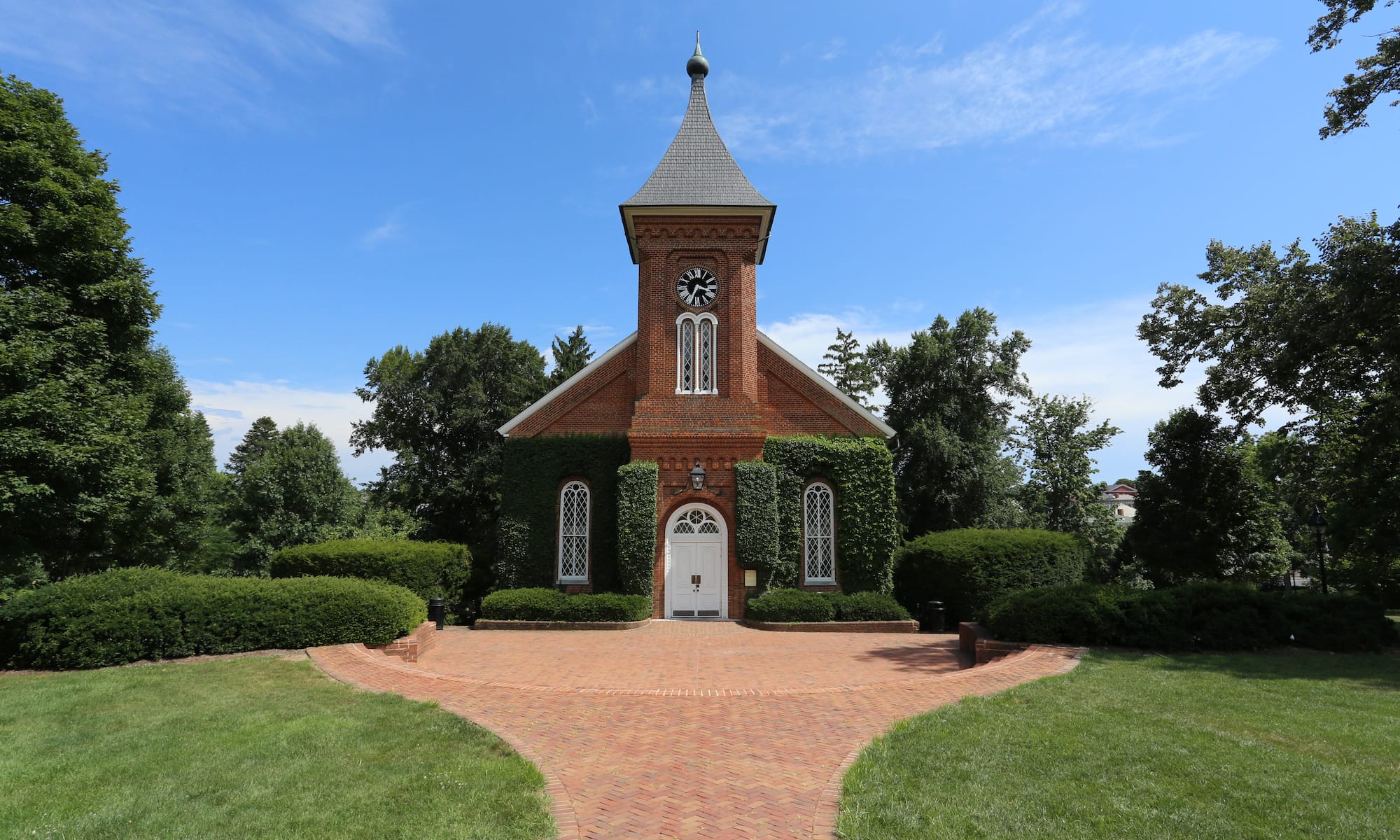
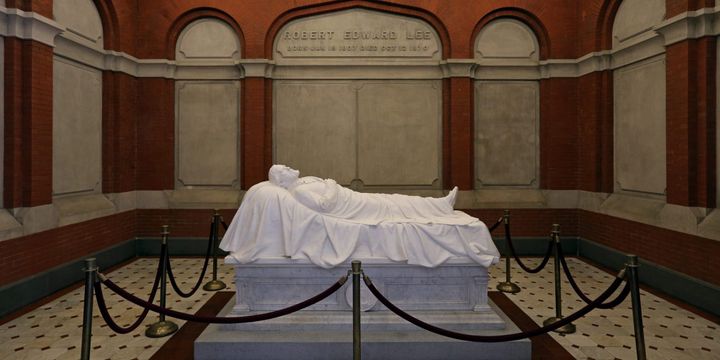
Washington and Lee has long been one of the most complete expressions of this project. We have called it, in effect, the country's largest Confederate memorial. The chapel, the recumbent statue, the horse's grave, the portraits, the Founders' Day holiday, and the names on the buildings, and so on. None of this was accidental. It was a curriculum. One that produced, in the author's own words, a "lasting impact on generations of alumni."
He means that as a compliment. And what of the lasting scars?
The Lost Cause required no museum because it had something better: an entire campus organized around a single, uncontested interpretation. Building a museum with all that entails introduces the possibility that the interpretation might be contested. That is exactly what the author fears. He calls the future museum director an "institutional apparatchik." The word choice is telling. An apparatchik is an enforcer of official ideology. What he fears, without quite saying so, is that someone might finally enforce a different ideology than the one generations of students grew up breathing, whether they wanted to or not.
What museums actually do
The argument against the Institutional History Museum rests on a false premise. It presupposes that what existed before was neutral, and what is being built is political. We know this is exactly backwards.
The portrait without context is not neutral. Recumbent Lee in the chapel is not neutral. Traveller's grave, placed where students pass it daily, is not neutral. These are arguments made in stone and paint and tradition. They have always had a point of view.
The only thing that has changed is that the university is now willing to say so. After much prodding of course.
The Board of Trustees said so much in 2023:
"[Washington and Lee is] an educational institution whose campus is neither a museum nor an appropriate repository for Confederate artifacts."
The author cites this statement as the enemy position. But, it is an institution finally saying out loud what an honest reckoning with its history requires.
A museum labels and names. It contextualizes. It situates objects and images within the history that produced them. It allows students to encounter the past as something to understand rather than be absorbed. This is education, not received knowledge.
Immersion without interpretation isn't education. It's indoctrination.
The stakes are not just abstract
This is where the argument stops being about portraits and plaques.
The Supreme Court's recent decision in Louisiana v. Callais did not emerge from nowhere. It is the latest instrument in a decades-long project to roll back the Voting Rights Act. This project has always depended, at its foundation, on a particular story. A fairytale about the Civil War, Reconstruction, and what followed.
The Lost Cause didn't only romanticize the Confederacy. It also provided the ideological framework to defend and normalize disenfranchisement. All so it could be eventually litigated back into legitimacy. Section 2 of the Voting Rights Act could not be gutted without the mythology that made it politically possible. And we've known this for a long time.
The same movement now invoking academic freedom to protest diversity programs on university campuses is simultaneously arguing that a private university has no right to contextualize its own symbols. The contradiction is not incidental. It is the point. Academic freedom, in this deployment, means the freedom to maintain the inherited interpretation. It does not extend to the freedom to examine it. The programs designed to correct for the history that the Lost Cause obscured are the first targets.
That is not a principle. That is a protection racket for a particular version of the past.
Despite the wishes of those in that stick fort, W&L is not an island. What it decides about how to present its history is the question. Does it do so in ambient, unremarked veneration as it has in the past? Or does it engage honestly with its own past and the South's as a whole? This would mean contextualized engagement.
The answer to this question connects directly to the larger battle over whose history gets told, whose votes get counted, and whose version of America gets to be the one students absorb by osmosis.
As alumi and university family, we know it has landed as an institution in the past, but we've also shown glimmers of hope by engaging with the future. W&L must meet this moment wisely.
It must be:
Non incautus futuri.