Honor, integrity, and civility
Washington and Lee's presidential profile is more serious than expected, but its emphasis on civility reveals a load-bearing contradiction.

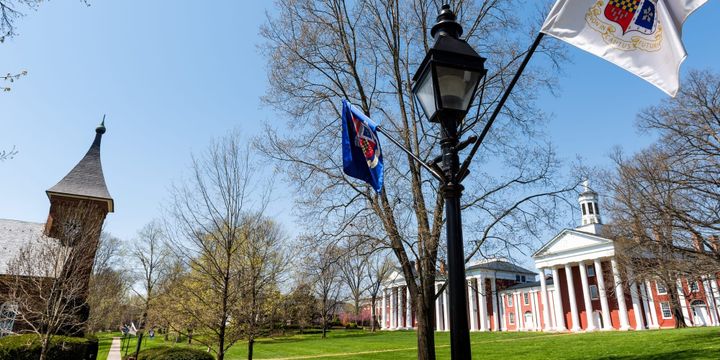
Washington and Lee's presidential search committee released a profile last week outlining the expectations of it's next president. It is worth reading.
To be honest, it's more serious and forward looking that I expected. That said, it's not perfect. The distance between what it gets right and what it minimizes tells us something important about the institution's current moment.
The profile requires the next president to understand Washington and Lee's history as "a critical component of the University's identity." It does place it as a burden to be managed but as a subject requiring "thoughtful leadership." The Institutional History Museum, still in progress, gets a prominent place in the opportunities section.
The access and affordability commitments are real and detailed. The intellectual pluralism language, backed by the faculty-led Liberating Ideas initiative, reflects genuine institutional investment. These are not throwaway lines. They bear marks of a community that has been in conversation with itself, and with critics, about what this university is and what it ought to become.
We have been part of that conversation. Some of what appears in this profile echoes the arguments made here and that others have been making. That's worth acknowledging. It is evidence that our efforts have not been futile.
But then there's civility.
The profile's first and framing charge to the next president is to "honor, preserve, and champion Washington and Lee's culture of integrity and civility." Integrity is unimpeachable. Civility, however, can be complicated. And the profile doesn't make it any less so.
Why does this matter? Civility, deployed as an institutional value without qualification, has a history. Universities like W&L—historically white, male, and well off—have long internalized the mythology of the Lost Cause. With this lens, civility has functioned as a management tool. It can recast legitimate grievances as bad manners. In this climate, the person raising uncomfortable questions bears more reputational cost than the institution that created the condition requiring the question. It is how "let's have a conversation" becomes a way of not having the conversation.
We said as much in January in an outline of what we hoped to see in W&L's next president. A genuine champion of difficult conversations, we argued, must be able to distinguish "between viewpoints that deserve engagement and conduct that violates community standards." A big part of this is recognizing that a standard of civility, applied without self-awareness, tends to burden those who can least bear it.
None of that appears in the profile. The civility mandate arrives unqualified and unexamined. This, in itself, is a kind of answer.
The alumni-unity language makes it explicit. The profile calls on the next president to continue "rebuilding unity and deepening alumni affinity" among graduates whose engagement had been "strained by the University's examination of its history."
The institution is asking its next leader to prioritize the comfort of alumni who were upset by honest history. That is not a neutral ask. A president with that mandate has a structural incentive to slow-walk the very historical reckoning the profile elsewhere presents as a commitment.
That tension isn't accidental. It's the document's load-bearing contradiction.
Washington and Lee's motto is non incautus futuri — not unmindful of the future. The profile invokes it. But a civility-first mandate, deployed to soothe alumni strained by the university's own truth-telling, is not mindfulness of the future. It is a hedge against it.
The next president will have to choose. The profile, to its credit, gives them the language to choose well. Whether the Board will support that choice is a different question. That question will shape the future of our university.
Non incautus futuri.